Daily rhythm
A flexible daily routine
Keep waking, meals, rest, and bedtime broadly recognizable while leaving space for real life.
Open this guide ↗Toddler · Ages 1–3
Toddler life is active, emotional, funny, and inconsistent. Build a home rhythm everyone can return to.
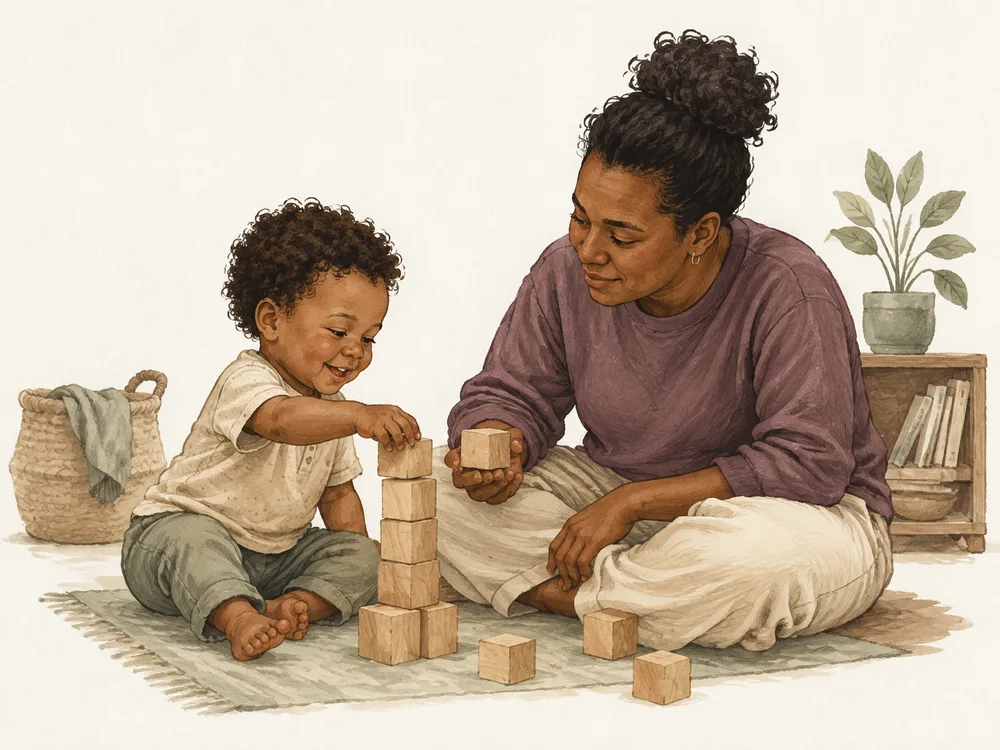
Daily rhythm
Keep waking, meals, rest, and bedtime broadly recognizable while leaving space for real life.
Open this guide ↗Big feelings
Use short language, stay nearby, and save explanations for after the storm.
Open this guide ↗Language
Narrate what you are doing, pause for responses, reread favorite books, and treat gestures and sounds as communication.
Open this guide ↗Play and food
Simple materials, repeated food exposure, movement, and small household jobs often do more than elaborate activities.
Open this guide ↗More for this chapter
Practical steps, useful questions, and checklists to keep.
Toddler · Daily routines
Predictability can help a toddler understand what comes next without requiring every day to run perfectly.
↗02Toddler · Big feelings
A toddler can have a real feeling and still meet a firm boundary. The caregiver’s job is safety, clarity, and reconnection.
↗03Toddler · Language
Language grows through responsive interaction, repetition, books, play, and everyday attempts to communicate.
↗04Toddler · Sleep
A short, repeatable wind-down helps everyone know what comes next. It does not guarantee a particular night.
↗05Toddler · Food
The household can control what is offered, the setting, and the rhythm. Appetite and acceptance may vary.
↗06Toddler · Potty learning
Potty learning combines development, body awareness, communication, routine, environment, and family readiness.
↗07Toddler · Play
Toddlers often learn through repetition, movement, imitation, pretend play, and participation in ordinary life.
↗Keep going